
MB.OS Arrives in Laval: How Mercedes' New AI System Changes Your Daily Drive
March 30 2026,
Mercedes-Benz is bringing artificial intelligence to your daily commute. The 2026 CLA EV and upcoming 2027 GLC EV introduce MB.OS - a new operating system that learns your habits, anticipates your needs, and adapts to how you actually drive. Your car can now remember your favourite route to work and adjust the climate before you ask.
For drivers in Laval and across Quebec, MB.OS offers a shift in how vehicles respond to their owners. It is not just a touchscreen upgrade - it is a system designed to understand context, process natural language, and integrate with the devices you already use. Here is how it works and what it means for the two electric models launching with it.
What MB.OS Actually Does
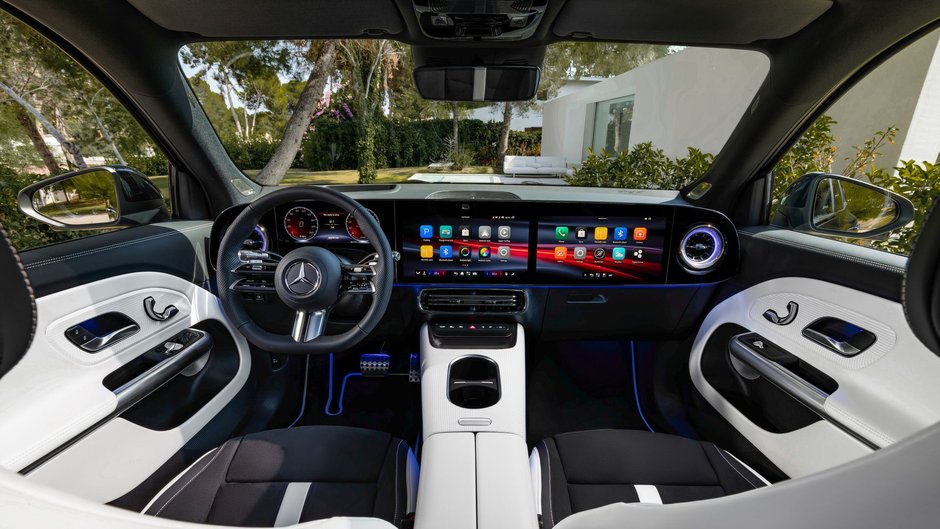
MB.OS is the fourth generation of Mercedes' MBUX infotainment platform, rebuilt from the ground up with artificial intelligence at its core. It pairs Microsoft's cloud computing with Google's AI models to create a system that processes requests in real time and learns from your behaviour.
The MBUX Virtual Assistant is the most visible part of this. You can speak naturally - no need to memorize commands. Say "I'm cold" and the system raises the cabin temperature. Ask "Where's the nearest charging station with availability?" and it pulls live data, checks your current battery level, and suggests a route. The assistant can handle follow-up questions without repeating context, so a conversation flows like it would with a passenger.
The system also tracks patterns. If you drive to the same coffee shop every Saturday morning, MB.OS will start suggesting that route automatically. If you always lower the seat temperature when the sun is out, it will do that for you. Biometric authentication - via fingerprint or voice recognition - lets the system identify who is driving and load their saved preferences instantly.
Integration extends beyond the vehicle. MB.OS connects to your smartphone and smart home devices. You can unlock your front door from the car, check your home security camera on the centre screen, or adjust your thermostat before you arrive. The system also supports over-the-air updates, so new features and improvements download automatically without a dealer visit.
The CLA EV: Where MB.OS Debuts
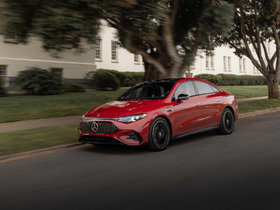
The 2026 CLA EV is the first Mercedes-Benz built entirely around MB.OS. It is also the first model on the new MMA architecture - an 800-volt electric platform designed for fast charging and long range.
Two variants launch initially. The CLA 250+ with EQ Technology uses a single rear-mounted motor producing 268 hp and 247 lb-ft of torque. It accelerates from 0-100 km/h in 6.7 seconds and offers a preliminary WLTP range of up to 792 km. The CLA 350 4MATIC with EQ Technology adds a second motor at the front for all-wheel drive, raising output to 349 hp and 380 lb-ft. It hits 100 km/h in 4.8 seconds and delivers up to 771 km of range.
Both models use an 85 kWh battery and a two-speed transmission - a rarity in electric vehicles. The first gear prioritizes acceleration from a stop, while the second gear optimizes efficiency at highway speeds. This setup allows the CLA to maintain strong performance without sacrificing range.
Charging is handled by the 800-volt architecture. At a DC fast charger, the CLA 250+ can add up to 325 km of range in 10 minutes, while the CLA 350 4MATIC adds up to 315 km in the same timeframe. A full 10-80% charge takes 22 minutes. The system also includes an air-to-air heat pump, which reduces energy consumption when heating or cooling the cabin - a feature that helps preserve range in cold weather.
The CLA also introduces a front trunk (frunk) - the first on a Mercedes-Benz in nearly a century. It adds 71 litres of storage in addition to the 440-litre rear cargo area.
The 2027 GLC EV: More Space, Same Intelligence
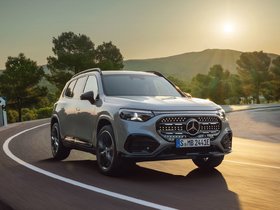
The 2027 GLC EV will be the second model to launch with MB.OS. While full specifications have not been released, Mercedes has confirmed it will use the same 800-volt architecture and advanced battery technology as the CLA. The GLC will offer multiple battery options, with the top variant supporting DC charging rates above 320 kW.
The GLC is designed for drivers who need more space and versatility. It will seat five, offer significantly more cargo capacity than the CLA, and include the same air-to-air heat pump for efficient climate control. Mercedes has tested the GLC in Arctic conditions to validate its range and performance in extreme cold - a priority for Canadian buyers.
Like the CLA, the GLC will feature biometric authentication, over-the-air updates, and full integration with smartphones and smart home systems. The MBUX Virtual Assistant will function identically across both models, so the learning curve is minimal if you switch between vehicles.
How MB.OS Compares to What You Know

If you have used Apple CarPlay or Android Auto, MB.OS builds on that foundation but goes further. Those systems mirror your phone's interface onto the car's screen. MB.OS is native to the vehicle - it controls every function, from climate to navigation to drive modes, and it learns from how you use them.
The system also integrates with your phone rather than replacing it. You can still use CarPlay or Android Auto if you prefer, but MB.OS adds a layer of intelligence that those systems cannot match. For example, if you ask the MBUX Virtual Assistant to find a charging station, it factors in your current battery level, your destination, and real-time charger availability. CarPlay can show you a map, but it cannot make decisions based on your vehicle's state.
Voice control is another area where MB.OS distinguishes itself. Most systems require specific phrasing - "Set temperature to 22 degrees" works, but "I'm too warm" does not. MB.OS understands context and intent, so you can speak naturally. It also remembers the conversation, so follow-up questions do not require repeating yourself.
What This Means for Laval Drivers
For drivers in Laval, MB.OS offers practical advantages. The system can learn your regular routes - whether that is the commute down Autoroute 15 or weekend trips to Mont-Tremblant - and suggest them automatically. It can also adapt to Quebec's weather. If the temperature drops overnight, the system can precondition the battery and cabin before you leave, preserving range and comfort.
The integration with smart home devices is particularly useful if you have a connected garage door, security system, or thermostat. You can control all of them from the car without pulling out your phone.
Over-the-air updates mean the system improves over time. Mercedes can add new features, refine existing ones, and fix bugs without requiring a service appointment. This keeps the technology current for the life of the vehicle.
Key Specs: CLA EV Performance & Range
|
Model |
Power |
Torque |
0-100 km/h |
Range (WLTP) |
|
CLA 250+ |
268 hp |
247 lb-ft |
6.7s |
up to 792 km |
|
CLA 350 4MATIC |
349 hp |
380 lb-ft |
4.8s |
up to 771 km |
Key Specs: CLA EV Charging & Drive
|
Model |
Drive |
Charging (10 min) |
Battery |
Transmission |
|
CLA 250+ |
RWD |
up to 325 km |
85 kWh |
2-speed |
|
CLA 350 4MATIC |
AWD |
up to 315 km |
85 kWh |
2-speed |
Both models use an 800-volt charging system. Top speed is electronically limited to 210 km/h.
MB.OS Is the Foundation
The 2026 CLA EV and 2027 GLC EV are the first vehicles to run entirely on MB.OS, but they will not be the last. Mercedes plans to expand the system across its lineup, making this the standard platform for future models.
For buyers considering an electric Mercedes-Benz, MB.OS is a key differentiator. It is not just about the hardware - the battery, the motors, the charging speed. It is about how the vehicle responds to you, learns from you, and integrates with the rest of your life. That is the promise of artificial intelligence in a car, and it is available in Laval.
Visit Mercedes-Benz Laval in Laval to see the 2026 CLA EV and learn more about MB.OS. The system is best experienced in person, and our team can walk you through its features and capabilities.