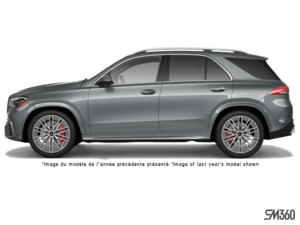

Fonctionnement de la traction intégrale 4MATIC dans le Mercedes-Benz GLE 2026 : un regard sur la technologie de la transmission
June 02 2026,
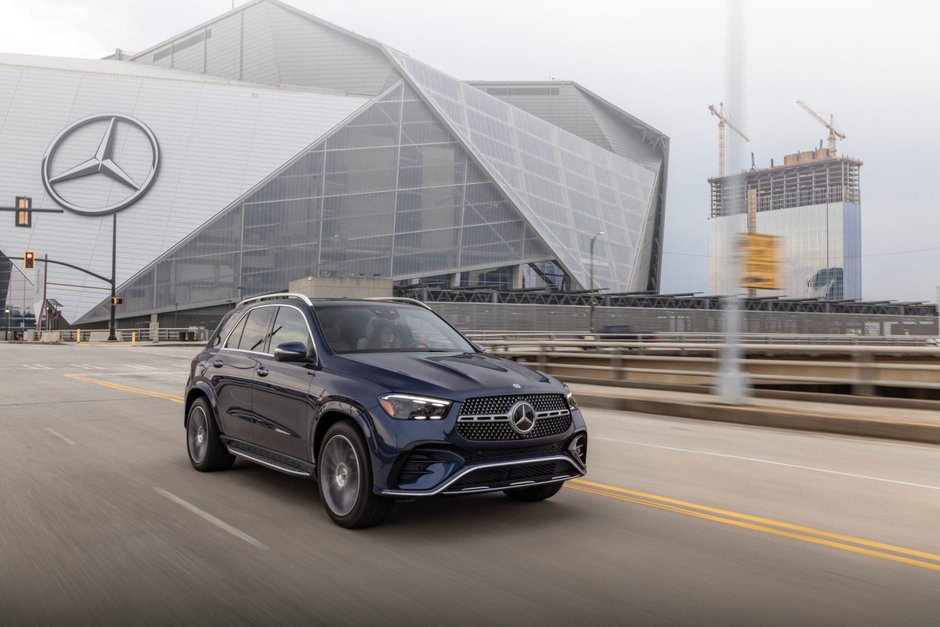
Most all-wheel-drive systems split power between axles in fixed proportions. The 4MATIC system in the 2026 Mercedes-Benz GLE works differently. It monitors road conditions continuously and can shift torque distribution anywhere from 0 to 100 percent to either axle, in real time. That flexibility is what makes the GLE feel planted on dry pavement and equally sure-footed on slick or unpredictable surfaces.
The 4MATIC name has been part of the Mercedes-Benz lineup since 1985, but the version in the current GLE reflects decades of ongoing development. Every 2026 GLE model comes with it standard. Understanding how it actually works makes it easier to appreciate what it does for everyday driving — on clear roads and in difficult conditions alike.
Torque on Demand: The Core Mechanism
At the heart of the system is a transfer case with an electronic multi-plate clutch. This clutch varies torque distribution between the front and rear axles based on a constant flow of data from the vehicle's sensors. The process happens automatically, and the driver does not need to activate or configure anything.
The system can send all available drive torque to the rear axle when conditions favour it, then shift progressively toward a more balanced split or full front axle delivery as the situation changes. The physical operating principle of the clutch is similar to that of a centre differential lock, which means it can effectively lock power distribution when maximum traction is needed.
- Torque distribution range: 0 to 100 percent to either axle
- Adjustment is continuous and automatic, not stepped
- Transfer case uses an electronic multi-plate clutch
- System responds to traction, speed, steering input, and throttle position
On Pavement: Agility and Handling Precision
On dry or clear roads, 4MATIC does more than stand by as a backup. The system actively uses torque distribution to influence vehicle rotation in corners. By sending more power to the outside rear wheel during a turn, the system can help the GLE rotate more naturally through a curve.
This kind of torque vectoring through the drivetrain makes handling feel sharper and more predictable. At higher speeds, the GLE also benefits from how the 4MATIC system works alongside the Electronic Stability Program (ESP) to manage individual wheel braking. The result is a large luxury SUV that responds with more precision than its size would suggest.
In Poor Conditions: Traction and Stability
In rain, snow, or on loose surfaces, the 4MATIC system shifts into its traction-management role. When a drive wheel begins to spin or lose grip, the transfer case can redirect torque to the axle with more traction before any slippage becomes noticeable to the driver.
On icy roads, this kind of proactive distribution is more effective than reactive wheel-braking intervention alone. The system does not wait for a wheel to spin; it anticipates traction demands based on inputs like steering angle, throttle position, and surface grip feedback.
The GLE also offers DYNAMIC SELECT, which includes an Off-Road drive mode. In that mode, the 4MATIC system, suspension settings, and throttle response are tuned specifically for gravel, sand, and other uneven terrain. A low-speed Downhill Speed Regulation (DSR) function works in conjunction with 4MATIC to hold a controlled pace on steep descents.
How 4MATIC Varies Across the GLE Lineup
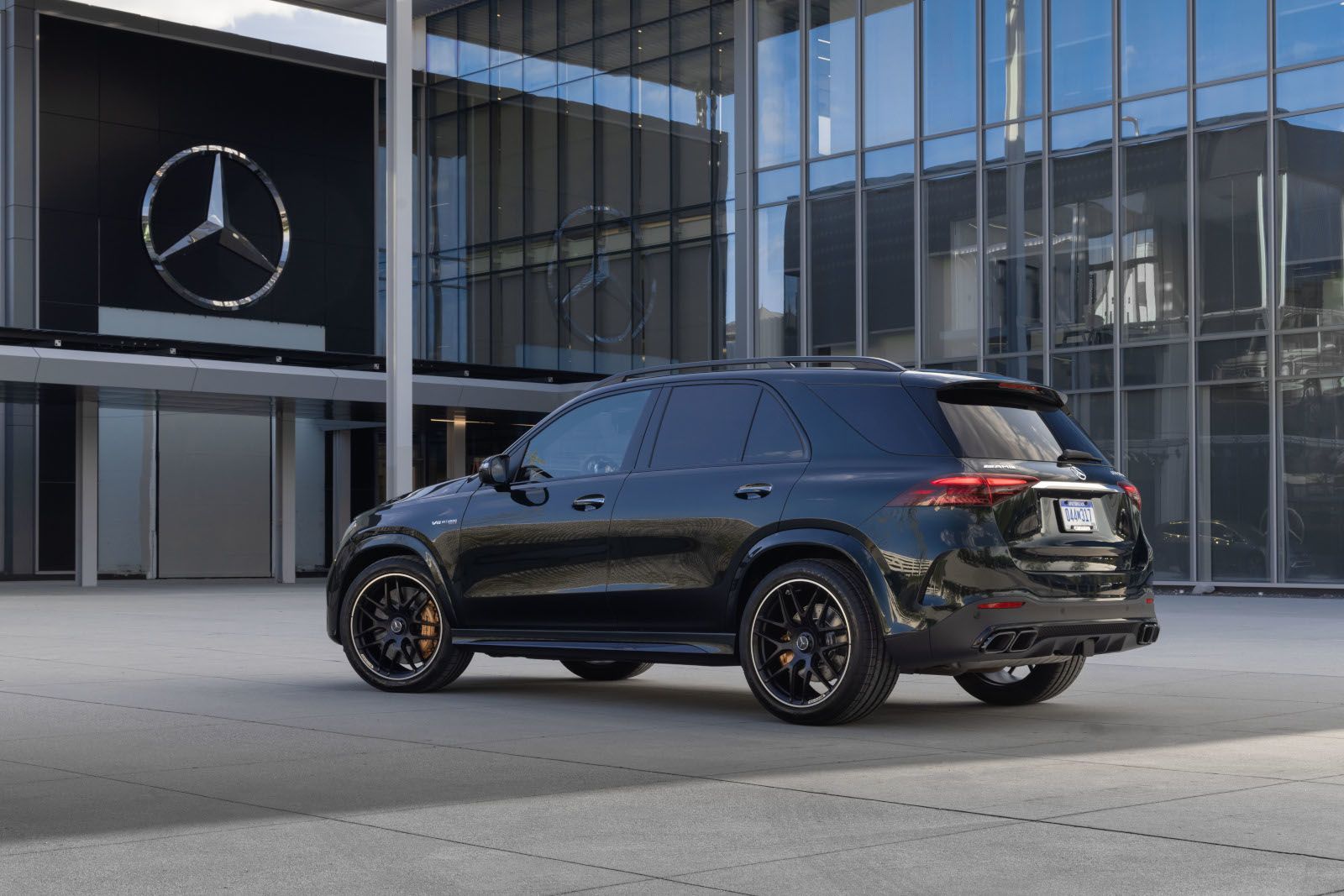
The base 4MATIC system in the GLE 350 4MATIC and GLE 450 4MATIC is a fully variable, on-demand setup. The GLE 450e 4MATIC plug-in hybrid uses the same core transfer case but adds an electric motor to the drivetrain equation, which gives it additional torque delivery capability on both axles.
AMG models like the AMG GLE 53 and AMG GLE 63 S use AMG Performance 4MATIC+, a performance-tuned variation that can send up to 100 percent of drive torque to the rear axle for more dynamic handling, and can also distribute it fully forward when traction conditions require.
|
GLE Variant |
4MATIC Type |
|---|---|
|
GLE 350 4MATIC |
Fully variable 4MATIC (Torque on Demand) |
|
GLE 450 4MATIC |
Fully variable 4MATIC (Torque on Demand) |
|
GLE 450e 4MATIC |
Fully variable 4MATIC + plug-in hybrid electric motor |
|
AMG GLE 53 / AMG GLE 63 S |
AMG Performance 4MATIC+ |
The Role of DYNAMIC SELECT and Suspension
DYNAMIC SELECT lets the driver choose from ECO, Comfort, Sport, Sport+, and Off-Road modes, each of which adjusts how the 4MATIC system behaves alongside the throttle response, transmission shift programming, and damping (where the available AIRMATIC air suspension is fitted).
In Comfort mode, the system prioritizes smooth torque delivery and minimal body motion. In Sport mode, it holds a more rear-biased distribution to support dynamic handling. In Off-Road mode, it coordinates with the DSR system and calibrates damping to absorb rough terrain more effectively.
At a Glance: 2026 GLE 4MATIC Key Facts
|
Feature |
Detail |
|---|---|
|
System type |
Fully variable (Torque on Demand) |
|
Torque distribution range |
0–100% to either axle |
|
Actuation method |
Electronic multi-plate clutch in transfer case |
|
Standard on |
All 2026 GLE models |
|
Drive modes |
ECO, Comfort, Sport, Sport+, Off-Road, Individual |
|
Terrain assists |
Downhill Speed Regulation (DSR) |
Learn More at Mercedes-Benz Laval
The 2026 Mercedes-Benz GLE is available at Mercedes-Benz Laval. If you have questions about how the 4MATIC system performs across different trim levels, or want to see the technology in action, the team in Laval is ready to walk you through it. Stop by to take a closer look, or reach out to arrange a time that works for you.